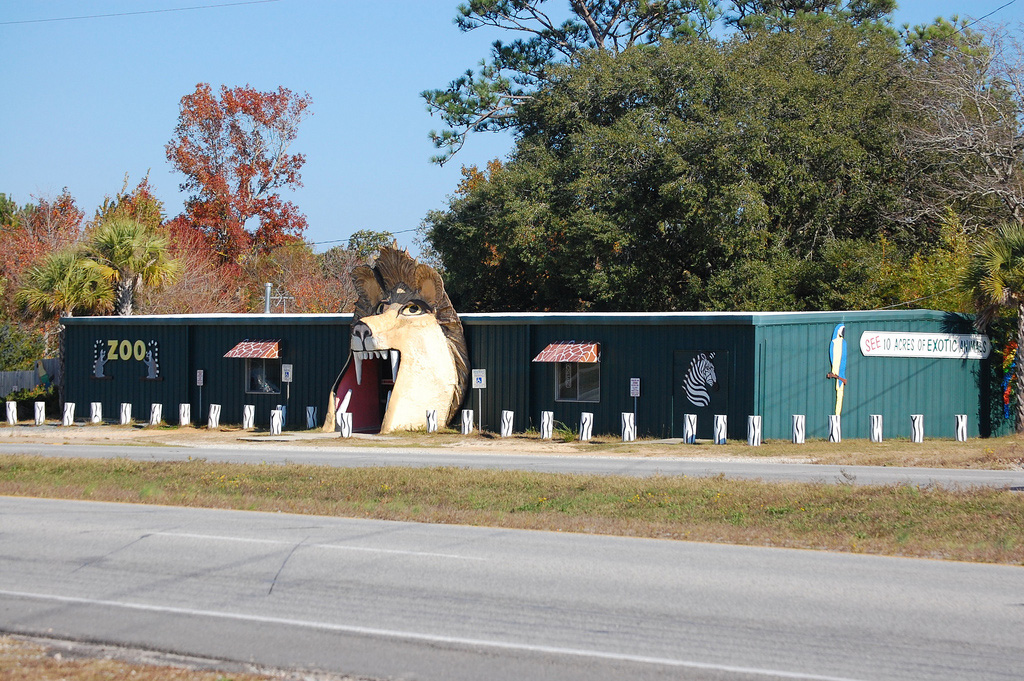
Roadside zoos are collections of animals in cages used to lure passing motorists to stop and see, feed or play with the animals. They became popular in the 1950s as the automobile became the preferred mode of transportation. Originally stocked with farm animals and native wildlife, they offered anything from donkey rides to snake pits. When the zoo animal breeding binge began in the 1960s, exotic animals, as they were called, became available from animal dealers and auction houses. Tigers, the largest and most recognizable of the big cats, became a prize attraction. Today there are more than 3,000 roadside zoos in 44 states and while not all have tigers, those that do usually have more than one.
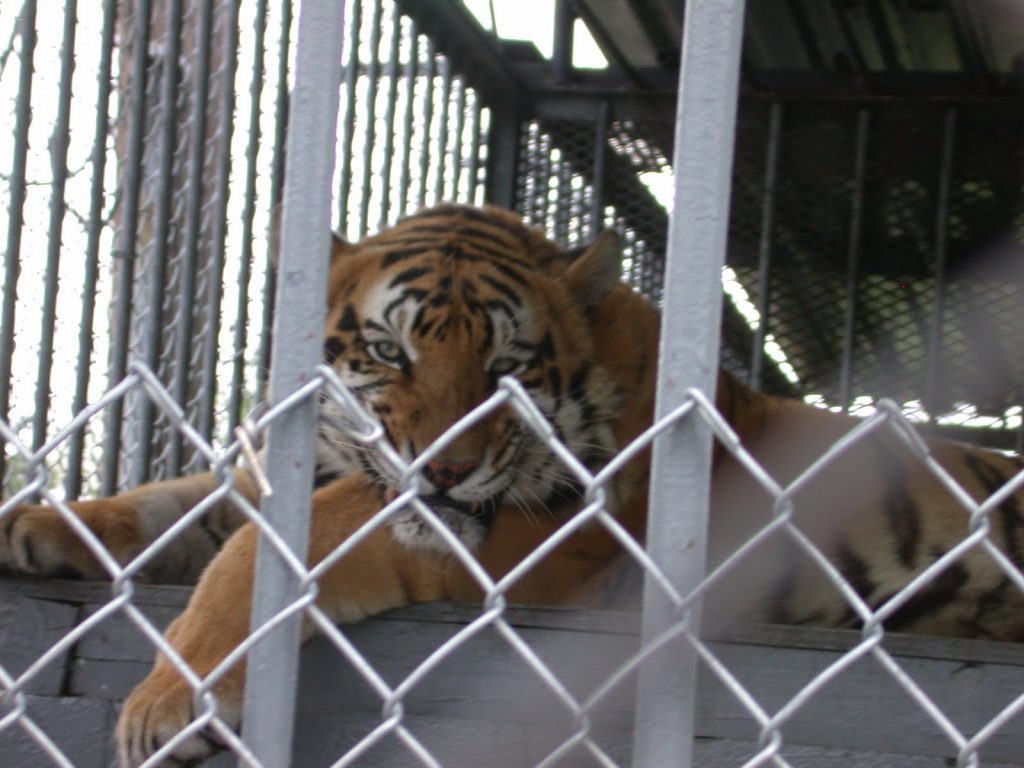
Although they call themselves zoos, they are not accredited by the Association of Zoos and Aquariums (AZA) and therefore have no standards. What these facilities have in common are barren cages, inadequate food, water, shelter, and veterinary care. A full grown 500 lb tiger can be confined to a 4′ by 8′ space 24 hours a day 7 days a week for its entire life. The animals are often crowded into conflict-prone groupings. A de-clawed tiger in a cage with tigers with claws cannot fight for food or defend itself. Because there are no food or nutrition standards they are generally fed road kill and garbage. The lack of veterinary requirements cause many tigers to die prematurely.
As these roadside attractions grew in number and sophistication, many began to advertise themselves as sanctuaries. With no restriction or obligation in the use of sanctuary in their business names, they promote themselves as sanctuaries and their tigers as rescues when in fact they are breeders or animal dealers.
True sanctuaries do not breed, buy or sell animals. They provide lifetime care, with large enclosures, proper nutrition, enrichment and medical attention for their animals.
A variation on roadside zoos are businesses that use tigers to draw attention to their principal activities. Any business from a winery or bed and breakfast to a truck stop or a flea market can get a tiger. These “sideshow” tigers are treated as disposable commodities. If their tiger gets sick or dies, they just dump it and get another one.
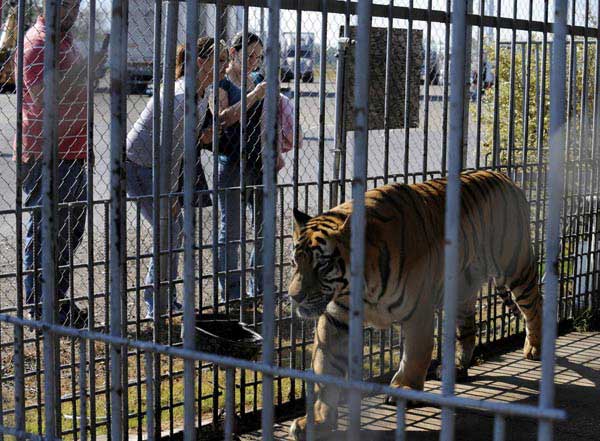
There have been many tigers born at the Tiger Truck Stop over 20 years. Tony the Truck Stop Tiger on Interstate 10 in Louisiana is shown below. He has spent his entire life in this cell breathing diesel fumes 24 hours a day for the amusement of customers that stop for fuel.
Please do not patronize roadside zoos or phony sanctuaries.